
-
SeAH Newsroom 4
SeAH Besteel, Securing productivity, quality, and safety with smart technology
SeAH Besteel, Securing productivity, quality, and safety with smart technology
Recently, the domestic steel industry has been introducing digital automation solutions in the production process, including development, manufacturing, distribution, and logistics, to improve productivity and quality. SeAH Besteel is also enhancing its competitiveness by actively investing in facilities and introducing smart technologies despite the industry downturn.
Small finishing factory, introduces smart technologies such as X-ray-based non-destructive inspection
SeAH Besteel has introduced an automated material composition analysis and quality management system at its Gunsan Plant's small finishing factory, further strengthening product quality and process reliability.
The finishing process is a stage where internal and external defects are inspected, and the type, specification, and weight of the product are confirmed before the delivery to customers. The most important aspect of this process is the ‘foreign material mixing prevention’ technology. If incorrect products are delivered, it can pose significant risks and costs to the customer’s entire supply chain. SeAH Besteel has introduced X-Ray Fluorescence (XRF) technology to accurately detect and analyze foreign materials during the finishing process.
XRF technology, also known as X-ray fluorescence analysis, is commonly used in portable or laboratory equipment, but SeAH Besteel applied it to the small finishing line, enabling the detection of material mixing without damaging the product and recording and preserving inspection results. This solved the problem of distinguishing materials by sight, which is difficult due to the identical appearance of steel products. The introduction of this technology made automated material composition analysis possible, significantly improving the reliability and accuracy of the entire process while minimizing the direct involvement of workers and ensuring work safety.
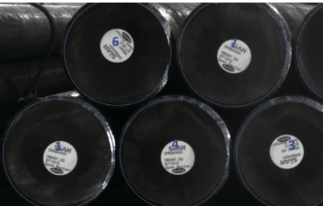
Additionally, the small finishing factory has established an additional automated system to enhance product tracking capabilities. Machine vision technology is used to provide imaging-based automated inspection and analysis for applications such as automatic inspection, process control, and robot guidance. The factory introduced cameras using machine vision technology to quickly and accurately inspect the label content and quantity of products before final shipment, minimizing human errors and securing quality reliability. In particular, since the finishing process is the final stage of inspecting defective products, continuous improvement work for quality management and process automation is being carried out.
Large Rolling Mill, introduces the Vision AI across all manufacturing processes
The large rolling mill has also enhanced its competitiveness by introducing smart technologies. In particular, advanced vision AI technology has been applied to various processes, improving the efficiency of continuous casting, heating furnaces, and product cooling stages. This has contributed to increasing the accuracy of product history management and strengthening quality reliability.
The laser marking machine introduced in the continuous casting process has reduced workers' exposure to high-temperature environments and significantly improved visibility. The previous stencil marking method involved punching characters into metal plates and applying lacquer, which required workers to perform tasks in high-temperature environments while wearing heat-resistant suits. The laser marking machine replaces this method by automatically engraving standardized characters. The automatic engraving of standardized characters has greatly improved the recognition rate of vision AI models, thereby significantly enhancing process efficiency and data reliability.
In the heating furnace process, OCR (Optical Character Recognition) technology has been introduced to verify and record product information marked during continuous casting in real-time. This allows for early detection of errors by comparing work instructions and enhances production stability and efficiency through data integration between processes.
A tracking system has been introduced in the product cooling stage, enabling real-time monitoring of product movement. This system visualizes the distribution of products across the cooling stage in a map format, adjusts the spacing between different products, and operates the cooling stage efficiently based on production status. In the bundling process, the composition of each product is clearly recorded, and accurate quantity inspections are possible using a machine vision-based bar counter. This has further strengthened quality management in subsequent processes.
In all industries, including steel, productivity, quality, and safety are values that cannot be compromised. SeAH Besteel is achieving more efficient production and quality improvement through the introduction of smart technologies and creating a safer working environment. These efforts will lead to continuous enhancements in SeAH Besteel’s competitiveness.
-
04036SeAH Tower, 45, Yanghwa-ro, Mapo-gu, Seoul,
Republic of Korea