
SeAH BLOG
insight 2026-06-17
Where Does Spent Nuclear Fuel Go?The Story of CASK, Shielding the Invisible Danger
Nuclear power is a core energy source that stably supplies massive amounts of electricity with low carbon emissions. However, the management of spent nuclear fuel remains a critical challenge once electricity is generated.
What is Spent Nuclear Fuel?
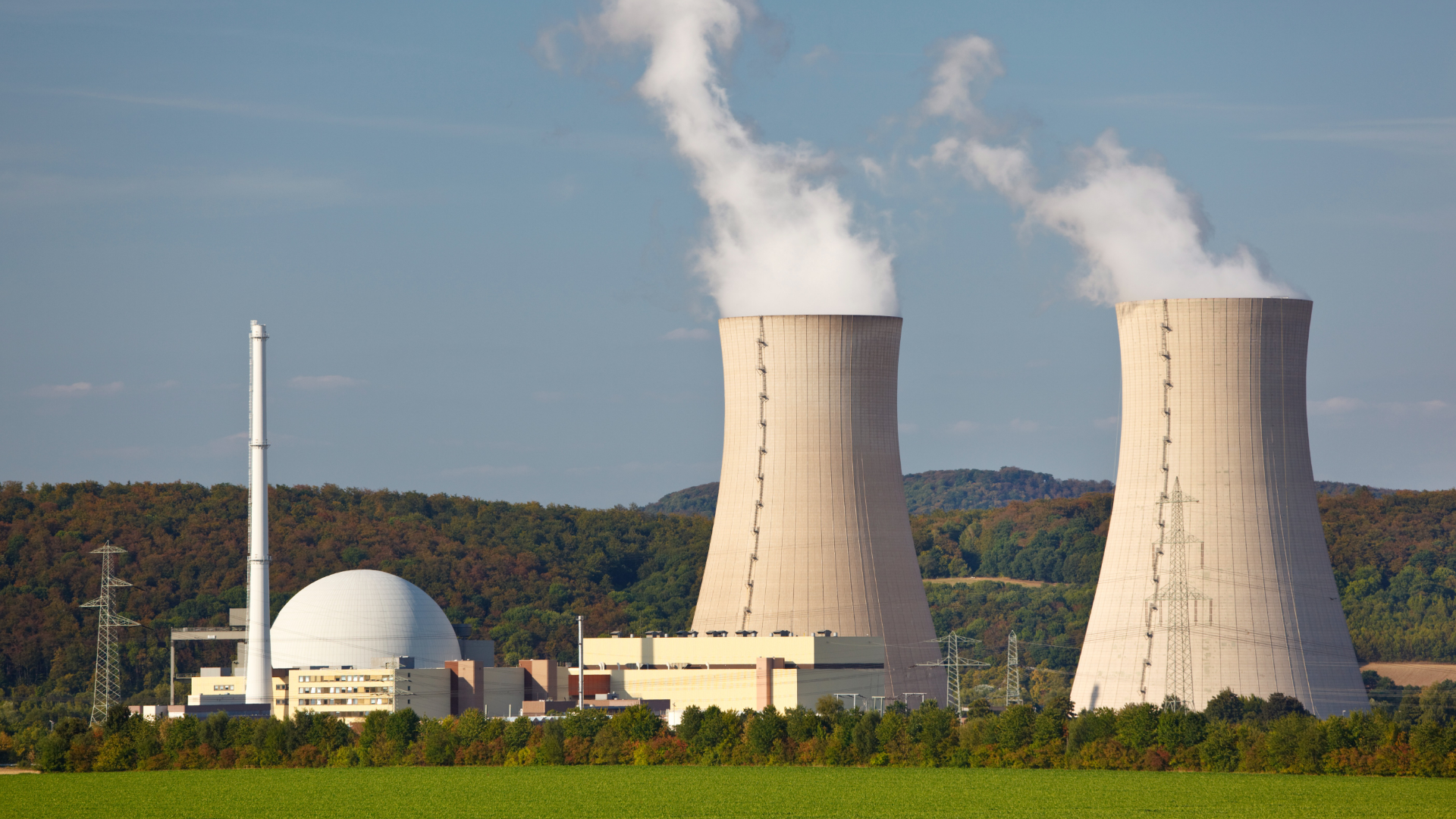
The Identity of the Fuel Left Behind After Nuclear Power Generation
Spent nuclear fuel refers to the material that has been used in the reactor and can no longer be utilized efficiently. Although it is no longer suitable for power generation due to declining efficiency during fission, it accumulates various radioactive substances inside.
Though these materials have reached the end of their lifespan as fuel, they still emit powerful radiation and high decay heat. To prevent any impact on the human body and the environment, sophisticated management technologies and long-term isolation spanning from decades to tens of thousands of years are essential.
Where and How is Spent Nuclear Fuel Stored?
Phase 1: Wet Storage to Cool Down the Heat Under Water
Spent nuclear fuel freshly removed from a nuclear reactor is extremely hot. For this reason, it first undergoes the wet storage method. Wet storage is a method of keeping spent nuclear fuel in large pools, where water simultaneously acts as a coolant to lower the heat generated by the fuel and as a shielding material to block radiation. Consequently, it is utilized as the most stable storage method in the initial stage.
Phase 2: Dry Storage Managed by Air
As time passes and the temperature of the spent nuclear fuel gradually decreases, a point comes when it no longer needs to be continuously cooled with water. From this point on, it can be transitioned to the dry storage method, which circulates air to cool the fuel.
Dry storage is a method of removing heat using air instead of water. Simply put, it utilizes natural convection to release the heat from the fuel to the outside, eliminating the need for separate cooling equipment or power supply. This offers the advantage of being highly favorable for long-term storage and easy to maintain.
Core Challenges of Storage and Transport
Spent nuclear fuel does not just stay in fixed facilities; it is also transported during the process of moving to interim storage facilities or permanent disposal sites. However, radiation shielding and thermal management must be maintained continuously even during transit. In particular, designs are required to maintain safety even under extreme accident scenarios such as collisions, drops and fires.
The Dangers of Spent Nuclear Fuel: Why Complex Technology is Needed
Spent nuclear fuel is a substance that emits both heat and radiation simultaneously. Controlling either one of these elements alone is challenging, but the requirement to completely block both at the same time complicates design criteria exponentially. It must be sealed to prevent radiation from leaking while effectively cooling the intense heat. Above all, the key lies in striking a sophisticated balance so that these two functions do not interfere with each other.
On top of this, the highly difficult condition of long-term stability is added. Spent nuclear fuel management technology must maintain the same performance as its initial state even after decades have passed. Since there must be no structural deformation or degradation of function over time, the design standards are inevitably much higher than those of general industrial equipment.
Ultimately, these challenges cannot be solved simply by using good materials or designing a solid structure. Safe management becomes possible only when advanced design, special materials and precise manufacturing technology are fully integrated as a trio.
CASK Technology Emerges as the Solution
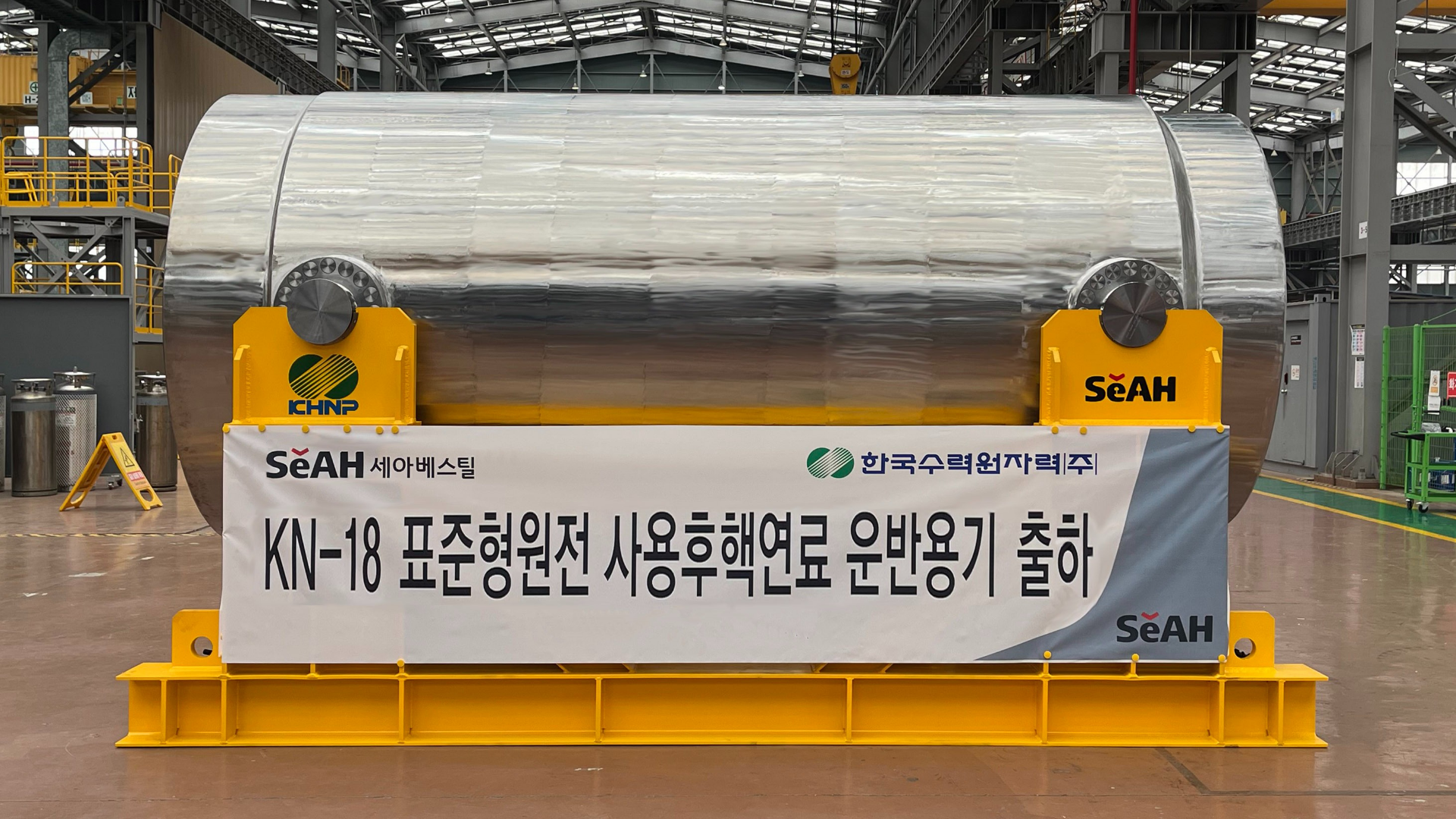
What is a CASK?
A cask is a specially manufactured container designed to safely store and transport spent nuclear fuel. Though it may look like a simple metal container on the surface, it is a highly sophisticated complex engineering system that integrates radiation shielding, thermal control and structural safety.
Multi-Layered Structure to Block Radiation
A cask features a multi-layered structure made of thick special steel alloys and shielding materials. This structure absorbs or weakens most of the powerful radiation generated inside, thoroughly controlling it outside the container to a level that is harmless to the human body.
Self-Cooling Design
The cask is designed to dissipate internal heat to the outside without any separate mechanical devices. By using materials with high thermal conductivity or designing heat-dissipating fins on the surface, it stably handles the decay heat that persists for decades.
Safety Based on Extreme Accident Scenarios
The reason cask manufacturing technology is so demanding is that it assumes not only normal environments but also the worst-case accident scenarios.
For example, during transport, the container could fall from a high place, suffer a strong collision or face extreme conditions like fire. If the structure is damaged during this process, internal radiation could leak to the outside, which leads to a problem that affects the surrounding environment and overall safety, rather than being a mere equipment failure. For this reason, casks are designed to maintain their shape and sealed structure even in accident scenarios. In accordance with the standards of the International Atomic Energy Agency (IAEA), they must pass all tests, including a nine-meter drop test, exposure to an 800 degree Celsius fire and immersion under 200 meters of water. The technology is recognized only when the sealed structure is maintained under any circumstances.
Spent Nuclear Fuel Market and Technical Competition
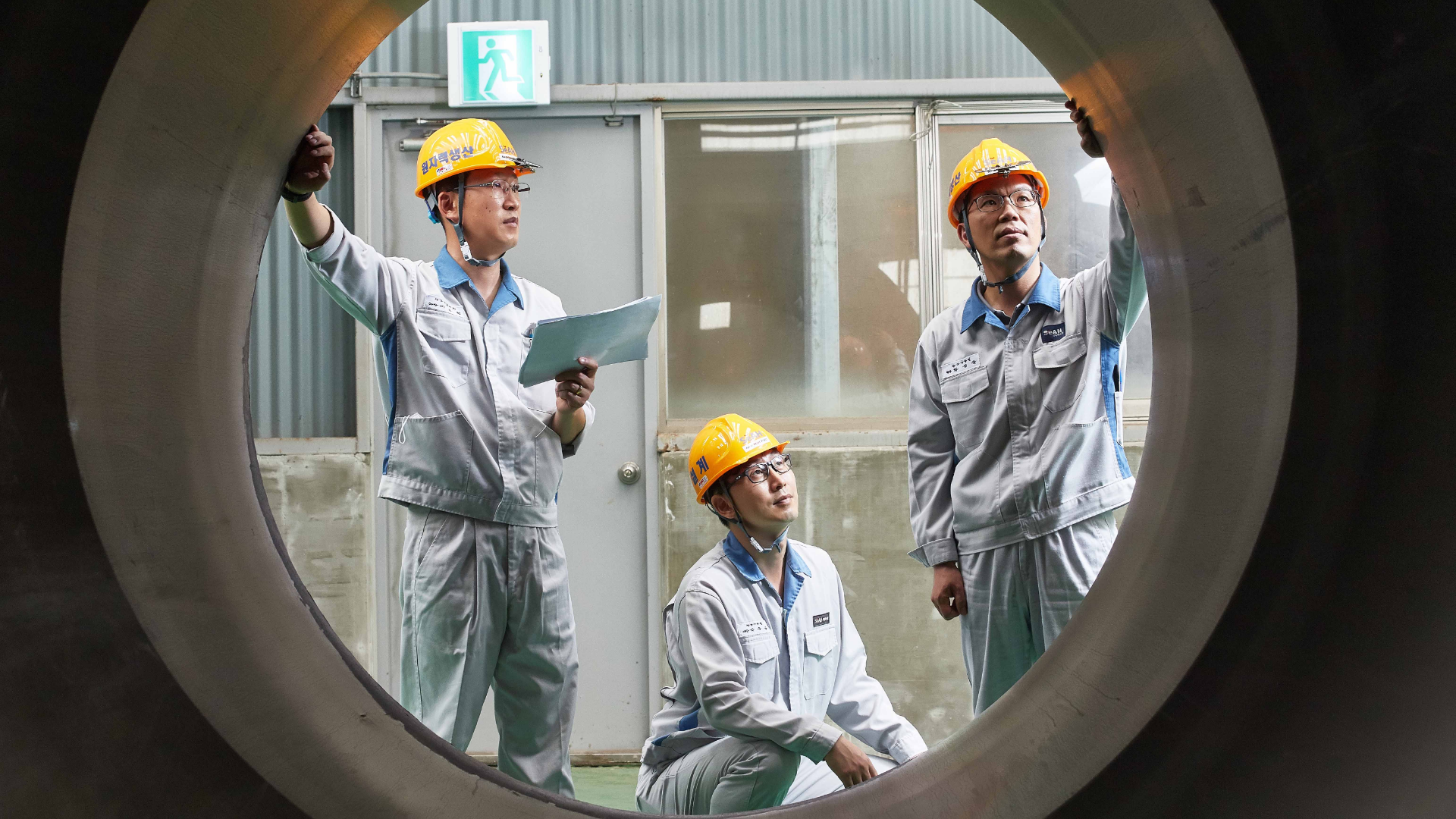
SeAH Besteel employees inspect a cask product at the manufacturing facility.
A Storage Problem Faced Globally
The issue of spent nuclear fuel is not a concern unique to any single country. It is a shared challenge faced by all nations that use nuclear power as an energy source, and the volume of fuel that needs to be stored continues to increase over time.
The problem is that securing facilities that can safely manage it for a long period is extremely difficult. This is because it requires not only a high level of safety but also geological site conditions and social acceptance from local communities. Consequently, countries around the world are risking everything to secure more stable storage technologies while improving the operational efficiency of existing storage facilities.
The Race for CASK Technology
As long as nuclear power generation continues, the generation of spent nuclear fuel is inevitable. The technology to safely store and transport it is bound to be a core task in operating the nuclear industry. In this process, cask technology has established itself beyond a simple storage container into a key driving force that determines the sustainability of the nuclear industry. Since the operation of power plants themselves could be halted if storage capacity reaches its limit, countries are continuously investing in securing related technologies and supply chains.
Why Localization is Crucial
A cask is not an area that can be resolved simply by importing foreign products like general equipment. Since spent nuclear fuel management is directly linked to national energy security and infrastructure, high dependence on external technology could disrupt long-term operational stability.
Furthermore, a cask is connected as a single system across the entire process, from design to materials, manufacturing and strict international certification. Since it is difficult to apply this technology in the field using only specific components, technological independence in the entire process is essential. In other words, the localization of casks carries the strategic significance of securing technological leadership in the back-end nuclear fuel cycle market, moving beyond merely replacing imported products.
CASK Technology Built by SeAH Besteel
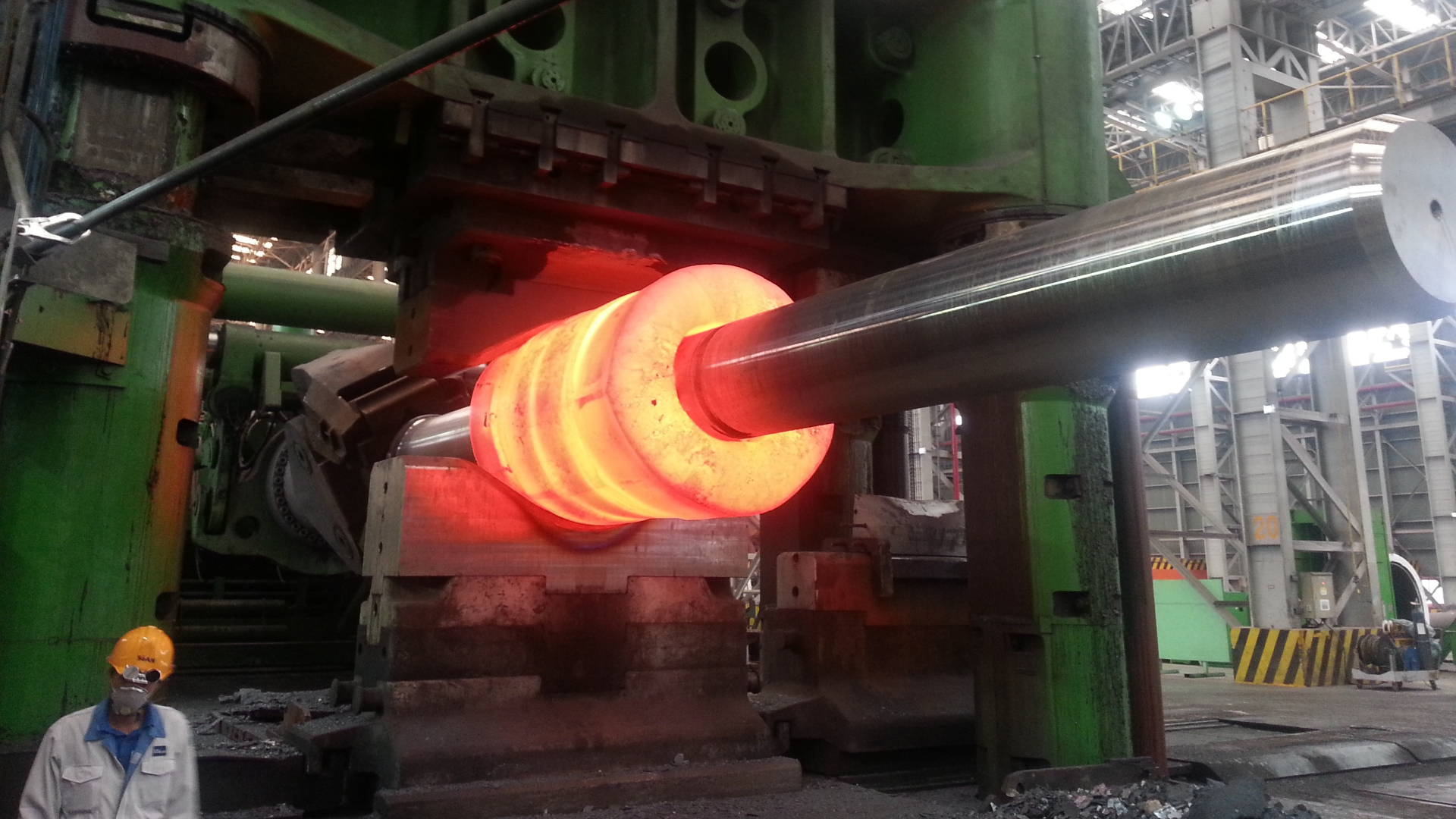
SeAH Besteel forges the KM-18 cask body shell using its 13,000-ton forging press.
Core Material Competitiveness Based on Special Steel
Since casks must endure harsh environments for decades, the quality of the material is more important than anything else. Based on world-class special steel design and production technology, SeAH Besteel has supplied forged materials and structural components for the nuclear sector optimized for radiation shielding and heat dissipation. Capitalizing on these technological capabilities, the company has expanded its business scope to manufacturing spent nuclear fuel storage casks.
Globally Recognized, Highly Reliable Forging Technology
Uniform quality without internal defects is an absolute requirement for a cask used over a long period, because even a small crack or non-uniformity can lead to structural problems over time. Consequently, forging technology, which makes the internal structure of the metal dense, plays a key role in cask manufacturing, rather than simple machining.
SeAH Besteel manufactures casks of uniform quality without internal defects through large-scale forging technology that makes the metal structure dense and solid. In particular, it proved its reliability in the global market by passing the strict quality certification of the U.S. Nuclear Regulatory Commission (NRC).
Total Solution Partner in the Field of Nuclear Safety
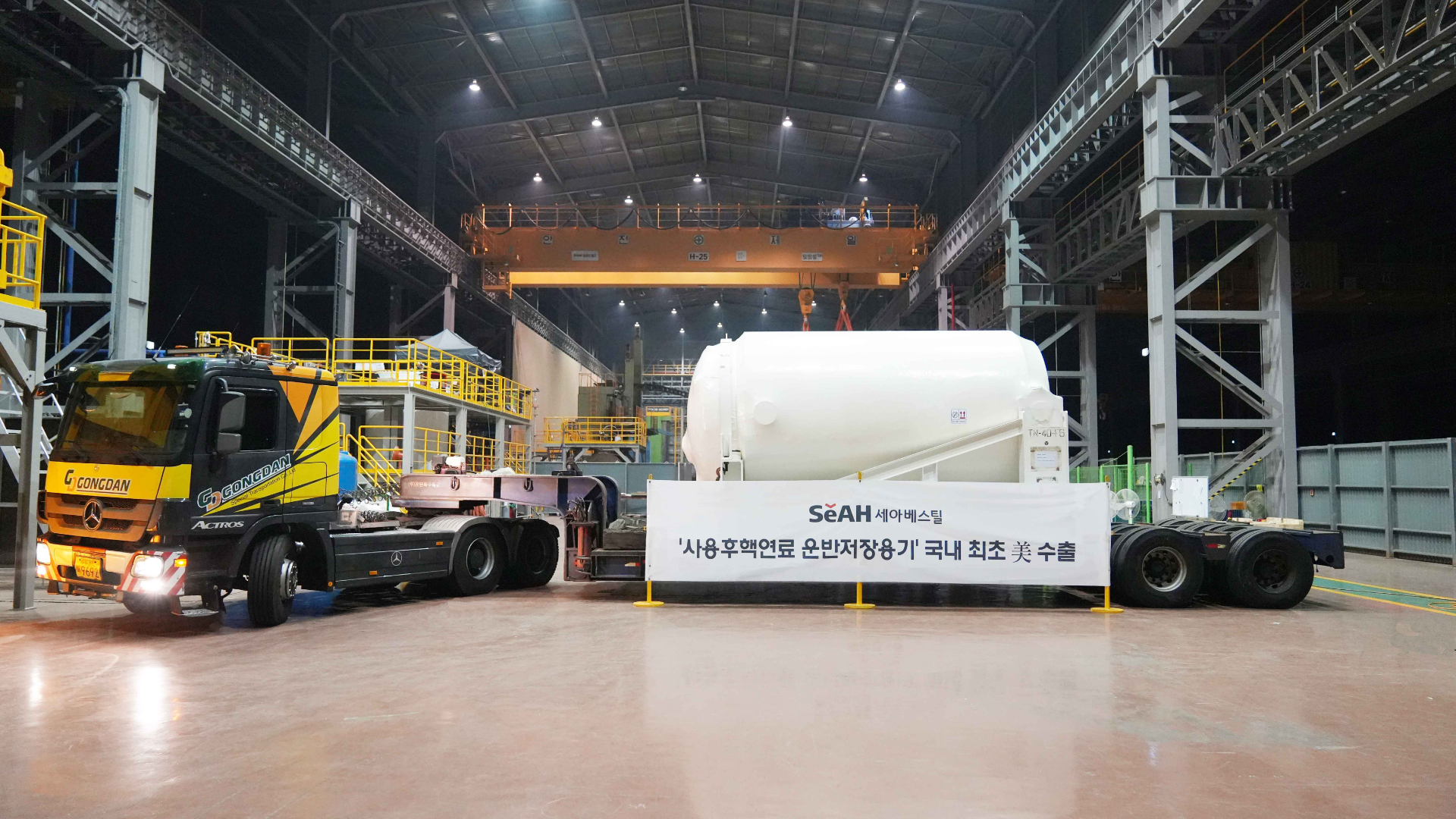
Spent nuclear fuel transport and storage cask supplied by SeAH Besteel to Orano TN.
Operating Korea’s largest specialized factory for nuclear equipment and materials, SeAH Besteel serves as a reliable shield protecting the world from invisible dangers, based on its long-accumulated special steel technology and strict quality control system.
This technological credibility has led to tangible achievements. In 2019, SeAH Besteel became the first in Korea to win a contract to supply spent nuclear fuel transport and storage casks from Orano TN, a global enterprise specializing in nuclear energy. Subsequently, in January 2025, it successfully completed the delivery of a total of eight units, proving its supply capabilities in the North American region.
In addition, the company successfully completed the full delivery of the spent nuclear fuel transport cask KN-18 ordered by Korea Hydro & Nuclear Power (KHNP) in November last year, solidifying its position in both the domestic and international nuclear power plant markets.
Spent Nuclear Fuel FAQ

What is spent nuclear fuel?
Spent nuclear fuel refers to nuclear fuel that has been removed from a nuclear power plant after generating electricity for a certain period. Although its physical lifespan as fuel has ended, it remains in a state where it continuously emits intense heat and radiation because radioactive substances remain inside.
How is spent nuclear fuel disposed of?
Spent nuclear fuel is not discarded immediately; instead, it undergoes a long-term storage and management process. Generally, after undergoing a cooling and management process for a certain period in temporary storage facilities inside the power plant, it is transferred to interim storage facilities or moved to final disposal facilities for permanent isolation in accordance with national policies.
How is spent nuclear fuel reprocessed?
Some countries chemically treat spent nuclear fuel to extract the remaining uranium or plutonium and recycle it back into fuel. However, because this involves highly advanced technology, economic viability and safety issues, whether it is applied depends on the policies of each country.
How should spent nuclear fuel be stored?
In the initial stage, a wet storage method is adopted to store it under water to cool down the high heat and block radiation simultaneously. Later, when the temperature drops sufficiently, it is managed in a direction that secures long-term stability by transitioning to a dry storage method that cools the heat through air circulation.
Why is spent nuclear fuel dangerous?
This is because spent nuclear fuel emits strong radiation and decay heat at the same time. Since it takes an extremely long time for the toxicity of radioactive materials to drop to natural levels, highly sophisticated technology is required to safely isolate and manage them for tens of thousands of years or more.
What is the difference between wet storage and dry storage?
Wet storage is a method that uses water to cool heat and block radiation, and it is used in the initial stage of spent nuclear fuel. On the other hand, dry storage is a method that naturally dissipates heat using the natural convection of air. Since it can be stored safely for a long period without external power, it is optimized for the long-term storage stage spanning decades or more.
What role does a cask play?
A cask is a special container used to safely store spent nuclear fuel or transport it to other facilities. It acts as a complex safety device designed to completely block radiation leaks, effectively dissipate internal heat and maintain its structure even under external impacts.
List