
SeAH BLOG
insight 2026-08-06
The Unsung Hero Behind Korean Defense Tech: High-Strength Aluminum and Alloy Technology Trends
From advanced fighter jets and precision-guided weapons to military vehicles and unmanned platforms, the Korean defense sector is rapidly expanding its global footprint. To maximize operational performance, modern platforms face a critical design imperative: achieving high strength and durability without adding bulk. Standing at the center of this technological breakthrough is high-strength aluminum—the foundational material powering the global competitiveness of Korean defense tech.
High-Strength Aluminum: Engineered for Lightness, Built for Strength
High-strength aluminum is an advanced alloy engineered with specific elements to deliver strength and durability far surpassing conventional aluminum. By maximizing mechanical performance without sacrificing the metal's inherent lightness, it has become the material of choice for high-performance structures and precision components that demand mission-critical reliability.
Alloy Technology for Higher Strength than Regular Aluminum
While pure aluminum offers excellent lightness and formability, it lacks the inherent strength required for heavy-duty structural applications. To overcome this limitation, high-strength aluminum alloys are engineered by integrating specific elements such as copper, magnesium, and zinc to enhance their mechanical properties.
By calibrating the types and ratios of these elements, engineers can tailor the alloy's physical characteristics. This meticulous alloy design yields strength and durability far superior to conventional aluminum. Today, a wide spectrum of alloy series has been developed, each purpose-built to meet the exacting demands of various industries and operational environments.
Mechanical Properties that Endure Extreme Impact and Load
High-strength aluminum is a premier structural material that balances low density with exceptional mechanical properties. When engineered to match the strength of steel, an aluminum structure can weigh as little as 33 percent of its steel counterpart, making it immensely advantageous for lightweight design. Furthermore, thanks to its high tensile strength and fatigue resistance, it delivers unwavering performance even in extreme environments subjected to repetitive loads and sudden impacts. Consequently, it has cemented its status as an indispensable material in the aerospace, mobility, and defense sectors—industries where shedding weight and maintaining structural integrity are non-negotiable.
The Backbone of Modern Military Equipment and Defense Systems
The modern defense sector is aggressively pursuing lightweight design to enhance mobility and maximize operational efficiency. Platforms such as fighter jets, military aircraft, unmanned aerial vehicles (UAVs), precision-guided weapons, and space launch vehicles must deliver peak performance under strict weight constraints, making the integration of lightweight, high-strength materials essential.
High-strength aluminum stands out as the optimal solution to these demanding requirements. Today, it serves as the critical backbone of modern weapon systems, widely applied in aircraft fuselages and wing structures, military vehicle frames, and components for precision-guided missiles and launch vehicles. Notably, with the rapid expansion of Korean defense exports and the accelerated development of advanced weapon systems, the value of high-strength aluminum as a premium structural material continues to soar.
Types of High-Strength Aluminum Alloys Used in Defense
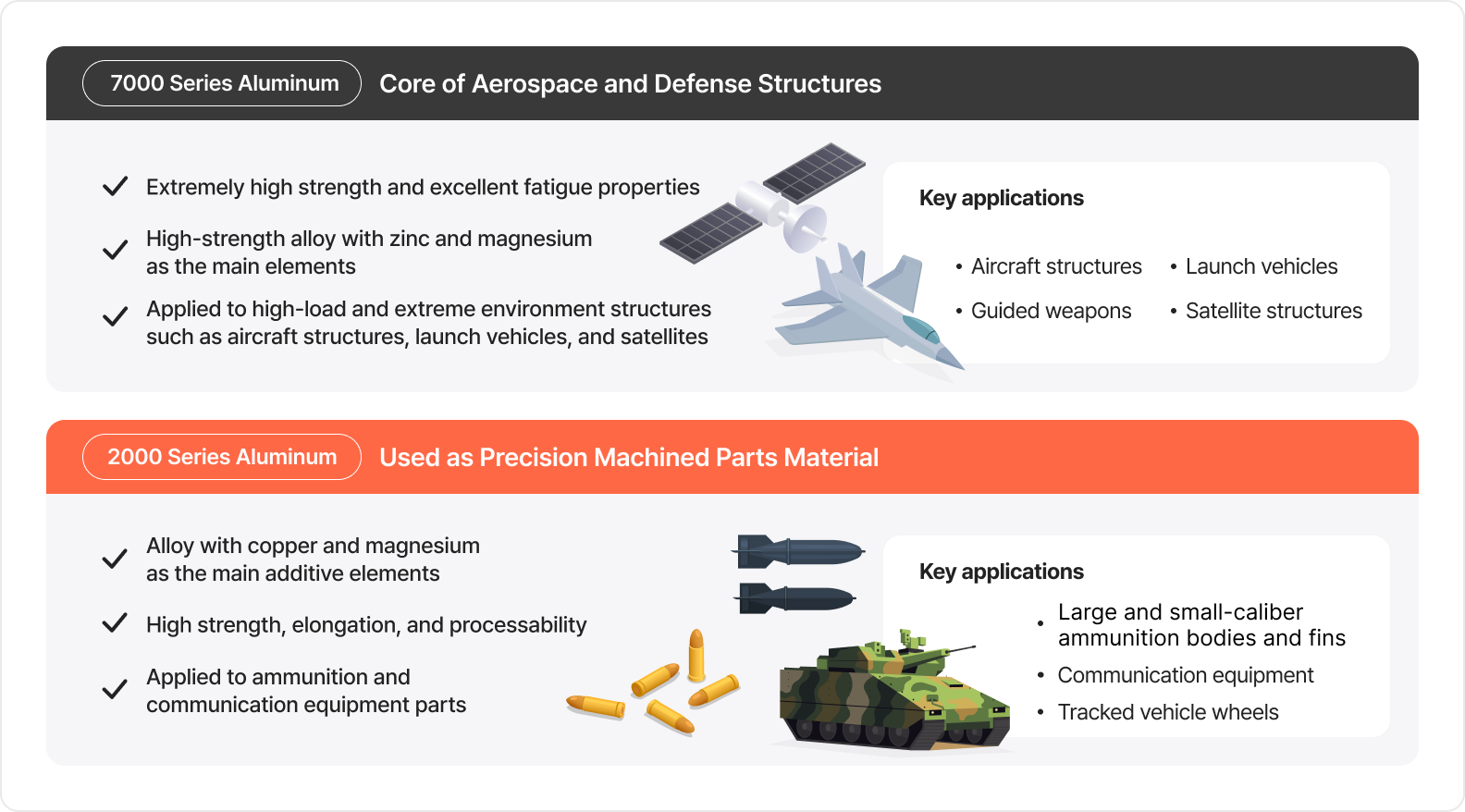
The physical and mechanical properties of high-strength aluminum can vary significantly depending on its specific alloy composition and heat treatment method. Within the defense sector, engineers meticulously select the optimal alloy tailored to strict requirements for strength, processability, and the realities of operational environments. Consequently, the 2000, 6000, and 7000 series have emerged as the premier choices for these demanding applications.
7000 Series Aluminum: The Core of Aerospace and Defense Structures
The 7000 series is an ultra-high-strength aluminum alloy engineered primarily with zinc and magnesium. Recognized for delivering the highest strength levels among all aluminum series, specific grades such as 7075 and 7050 have become the standard for structural materials in the aerospace and defense sectors.
A defining characteristic of this series is its ability to maximize mechanical performance through precise heat treatment. Powered by exceptional tensile strength and superior fatigue resistance, it ensures structural integrity, preventing deformation even when subjected to the repetitive loads and sudden impacts of flight.
2000 Series Aluminum: The Material of Choice for Precision Mechanics and Defense Components
The 2000 series is an advanced aluminum alloy engineered primarily with copper and magnesium. While it offers slightly lower ultimate strength than the 7000 series, prominent grades like 2024 and 2014 compensate with exceptional fracture toughness and superior mechanical stability in high-temperature environments.
Thanks to these unique characteristics, the 2000 series is sought after for critical structural components. In the aerospace sector, it is frequently applied to the lower sections of aircraft main wings. Within defense, it is heavily utilized for the bodies and fins of various munitions, as well as the road wheels of tracked military vehicles.
Differences Between 2000 and 7000 Series and Their Defense Applications
The primary distinction between the 2000 and 7000 series lies in their toughness and fatigue resistance. The 2000 series outperforms the 7000 series in fracture toughness and fatigue strength, while also maintaining superior mechanical properties at elevated temperatures. However, since copper is a primary alloying element, its corrosion resistance falls short of the 7000 series. Conversely, the 7000 series delivers the highest tensile and yield strengths available among all aluminum alloys. Despite these differences, both series offer exceptional processability derived from their robust strength, making them optimized for manufacturing precision components and serving as critical structural materials in the aerospace sector.
In the defense industry, these alloys are equally indispensable. They are extensively integrated into precision-guided weapons exposed to extreme operating environments, protective armor for military vehicles, and a wide array of munitions.
The Exacting Science Behind High-Strength Aluminum Production
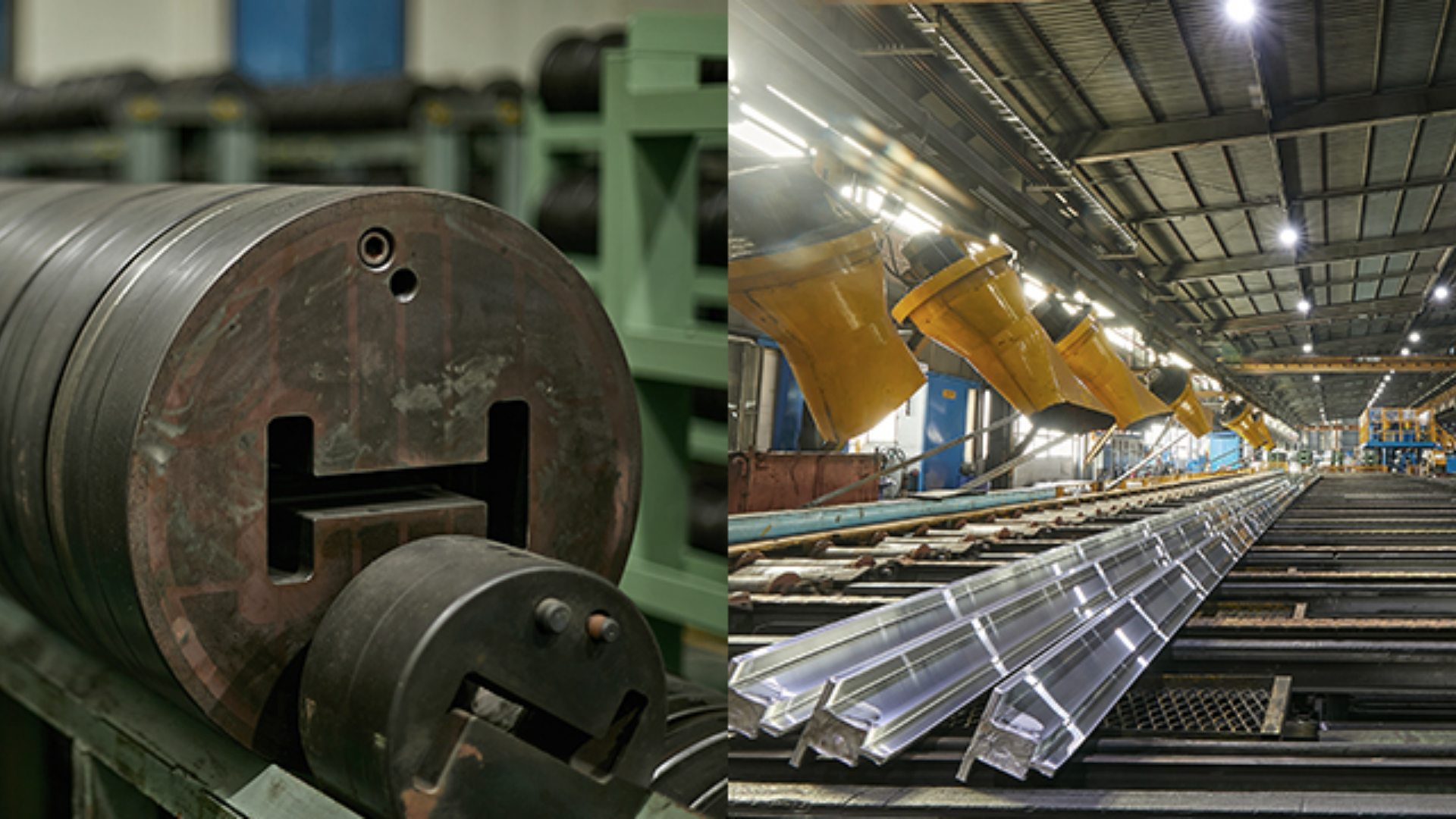
SeAH Aerospace & Defense's high-strength aluminum alloy extrusion facility
Achieving the desired performance of high-strength aluminum requires far more than simply blending alloying elements. To meet the stringent material specifications and reliability demanded by the aerospace and defense sectors, every phase of production—from casting, extrusion, and forging to heat treatment and final inspection—must be meticulously controlled. Because even the slightest deviation in the manufacturing process can fundamentally alter the alloy's final physical properties, producing these materials demands an exceptionally high caliber of manufacturing expertise.
Technology to Secure Uniform Structure and Strength in Extrusion and Forging
High-strength aluminum is shaped into exact specifications through advanced extrusion and forging processes. If the metal's internal grain structure fails to form uniformly during these stages, localized strength deviations can occur, potentially leading to catastrophic structural failures.
This uniformity is especially critical for aircraft structural components and defense hardware, which routinely endure immense, concentrated loads. Such applications demand consistent mechanical properties throughout the entire material. To achieve this, manufacturers must meticulously control pressure, temperature, and processing speed in real time to guarantee a stable microstructure. Because the complexity of quality control scales exponentially with the size of the component, the technological capability to engineer this flawless structural uniformity stands as a defining competitive advantage for top-tier material suppliers.
Thermal Precision: How Fractions of a Degree Dictate Final Performance
High-strength aluminum achieves its ultimate mechanical properties through a critical heat treatment phase. The 2000 and 7000 series, which are heavily relied upon in the defense sector, are prime examples of heat-treatable alloys. For these materials, essential characteristics such as strength, toughness, and corrosion resistance are entirely dictated by the precise conditions of their thermal processing.
This phase leaves absolutely no margin for error; even microscopic deviations in heating temperature, holding time, or cooling rates are unacceptable. At the same time, there is a surging demand for specialized heat treatment technologies capable of simultaneously maximizing strength, toughness, and corrosion resistance. Anticipating this industry need, SeAH Aerospace & Defense (SeAH A&D) is integrating a state-of-the-art rapid quenching facility at its Changnyeong plant, currently under construction. By instantaneously cooling materials from extreme temperatures, this advanced system is designed to secure world-class quality and competitive dominance in the global aviation aluminum market.
Going Beyond Compliance in Stringent Global Aerospace and Defense Certifications
In the defense and aerospace sectors, material failure can have catastrophic implications for human life and national security. Hence, these industries enforce global certification procedures that are exponentially more rigorous than those for standard industrial materials. Beyond conventional physical property testing, suppliers are required to demonstrate flawless end-to-end traceability of raw materials and provide verified digital quality data.
Demonstrating its exceptional capabilities, SeAH A&D has successfully secured OEM certifications from industry titans such as Boeing, Airbus, Lockheed Martin, and Korea Aerospace Industries (KAI). Achieving these stringent approvals is a critical prerequisite for entering the global supply chain, serving as a definitive testament to SeAH's world-class manufacturing prowess and uncompromising quality standards.
Global Defense Material Market Trends and Supply Competitiveness
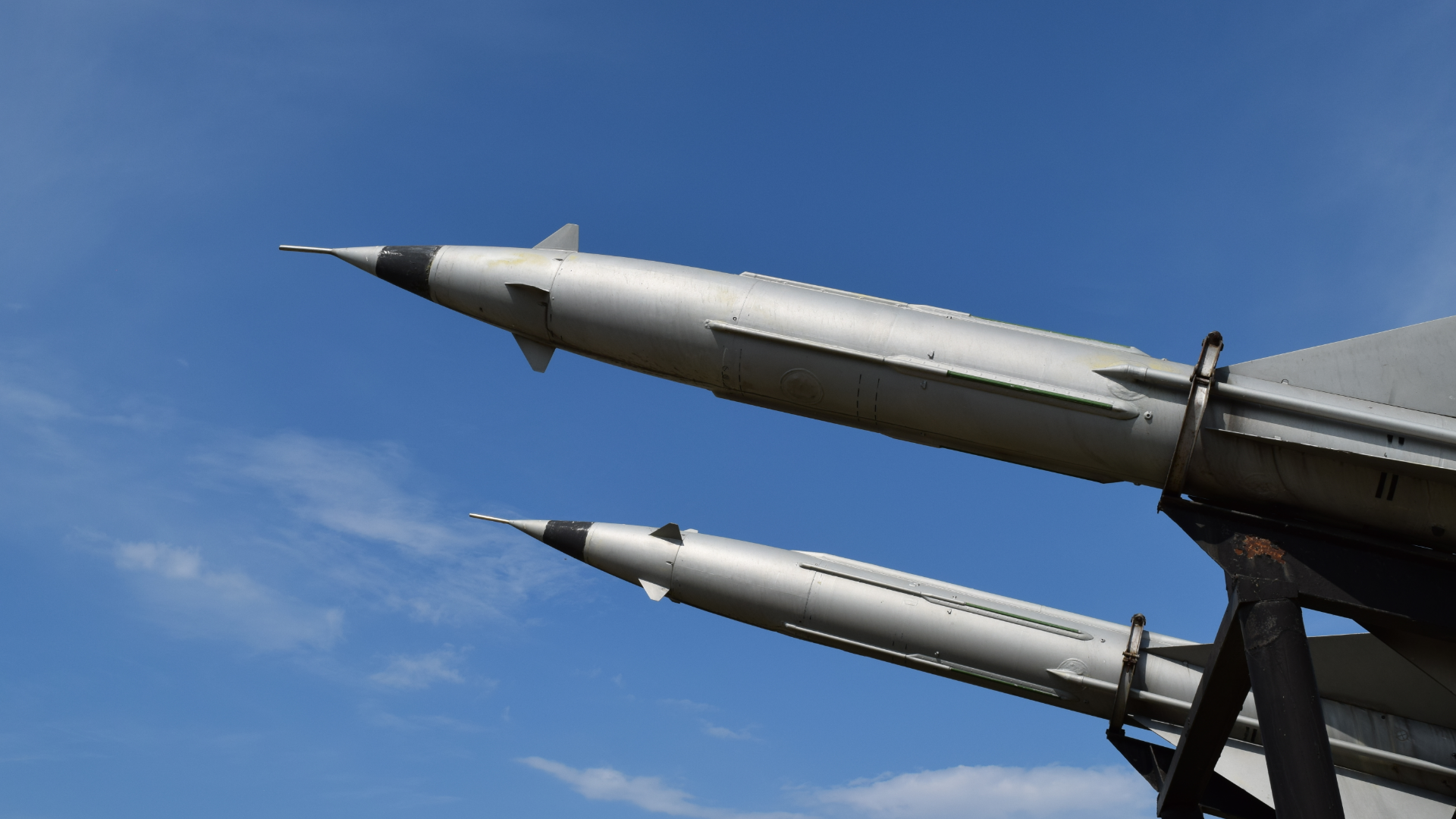
Today, the global defense industry has evolved far beyond the assembly of weapon systems; it is now engaged in a material security war to lock down critical supply chains for advanced components. Against a backdrop of escalating geopolitical risks, surging global defense budgets, and the unprecedented boom in Korean defense exports, the ability to ensure a stable supply of high-performance defense materials has emerged as a national competitive advantage.
Fueling the Export Boom: Surging Domestic Demand for High-Strength Aluminum
As Korean defense contractors secure record-breaking export contracts across diverse platforms, including fighter jets, self-propelled howitzers, precision-guided weapons, and military vehicles, demand within the domestic high-strength aluminum sector is surging correspondingly. Because the evolution of advanced weapon systems is increasingly defined by the need for superior mobility through lightweight engineering, the applications for aluminum alloys are continuously expanding. To keep pace with this trend, establishing a robust and stable localized supply chain for these critical materials has become more essential than ever.
Building Supply Chain Resilience Through Defense Material Localization
Historically, the aerospace and defense sectors relied heavily on a handful of dominant suppliers across the U.S., Europe, and Japan for ultra-high-performance specialty materials. However, recent global supply chain disruptions and escalating geopolitical conflicts have exposed this foreign dependency as a critical vulnerability, capable of triggering severe production delays and unacceptable gaps in national security. For the Korean defense industry to sustain its robust growth trajectory, achieving localized production and supply chain diversification for core materials, particularly high-strength aluminum, is no longer optional, but an absolute prerequisite.
Securing Advanced Material Capabilities to Penetrate Global Supply Chains
To secure a competitive edge in the global market, defense material suppliers must demonstrate both the long-term capability to meet stringent global standards and the operational reliability to scale high-volume production. Since global aerospace manufacturers and defense prime contractors select their vendors through thorough vetting processes, the successful entry of domestic material companies into the overseas market acts as a powerful catalyst, broadening the global footprint and strengthening the strategic position of the entire Korean defense ecosystem.
SeAH A&D's High-Strength Aluminum Technology and Production Capacity
SeAH A&D is spearheading the localization of Korea's aerospace and defense materials, driven by unrivaled technological prowess. This leadership is underpinned by comprehensive, end-to-end expertise that spans the entire manufacturing lifecycle—from precision alloy design and casting to advanced extrusion and specialized heat treatment.
Korea's Unrivaled Fully Integrated Facility for Defense Aluminum Alloy Casting, Extrusion, and Heat Treatment
Leveraging the nation's premier production capacity for high-strength aluminum alloys, SeAH A&D has established a fully integrated manufacturing infrastructure that spans from casting to extrusion and advanced heat treatment. The company specializes in supplying premium materials for aircraft fuselages and wing structures. This is achieved through its mastery of the 2000 and 7000 series alloys—materials that demand higher strength and precision than standard industrial aluminum. SeAH's technical superiority is driven by its advanced capabilities in microstructural control, precise dimensional management, large cross-section extrusion, and residual stress mitigation.
Demonstrating its R&D prowess, SeAH A&D partnered with Korea Aerospace Industries (KAI) to successfully develop Korea's first prototype of the AI7050 wing spar, a structural component for commercial aircraft wings, in 2022. Building on this momentum, the company achieved another national first in 2024 by successfully localizing the AL7136 aluminum extrusion material for aerospace components.
Securing Stringent Global Quality Certifications for Aerospace and Defense
For materials in the aerospace and defense sectors, quality and reliability are absolute imperatives. As even a microscopic flaw can compromise structural integrity and safety, global aircraft manufacturers enforce uncompromisingly stringent certification and quality protocols.
Beyond securing OEM certifications from major global aerospace and defense primes, SeAH A&D achieved a pivotal milestone by being designated as a primary supplier for Boeing in 2023. Under a long-term agreement (LTA) commencing in 2026, the company is undertaking the full-scale supply of high-strength aluminum alloys for Boeing's aircraft fuselages and wings, firmly cementing its reputation for quality and reliability in the global market. Furthermore, a recent multi-year contract extension and the receipt of the Boeing Supplier Production Partner Award serve as proof of SeAH A&D's world-class technological prowess and operational excellence.
A Future-Ready Partner Driving the Global Expansion of Korean Defense
To preemptively address surging global demand, SeAH A&D is constructing a new manufacturing facility in Changnyeong, Korea, with an annual capacity of 770 metric tons of high-strength aviation aluminum materials. Equipped with world-class, large-scale extrusion technology and advanced heat-treatment lines, the Changnyeong plant will significantly enhance the company's ability to supply next-generation aluminum featuring superior strength, high corrosion resistance, and exceptional toughness.
The Surge of Korean Defense and the Future of High-Strength Aerospace Materials
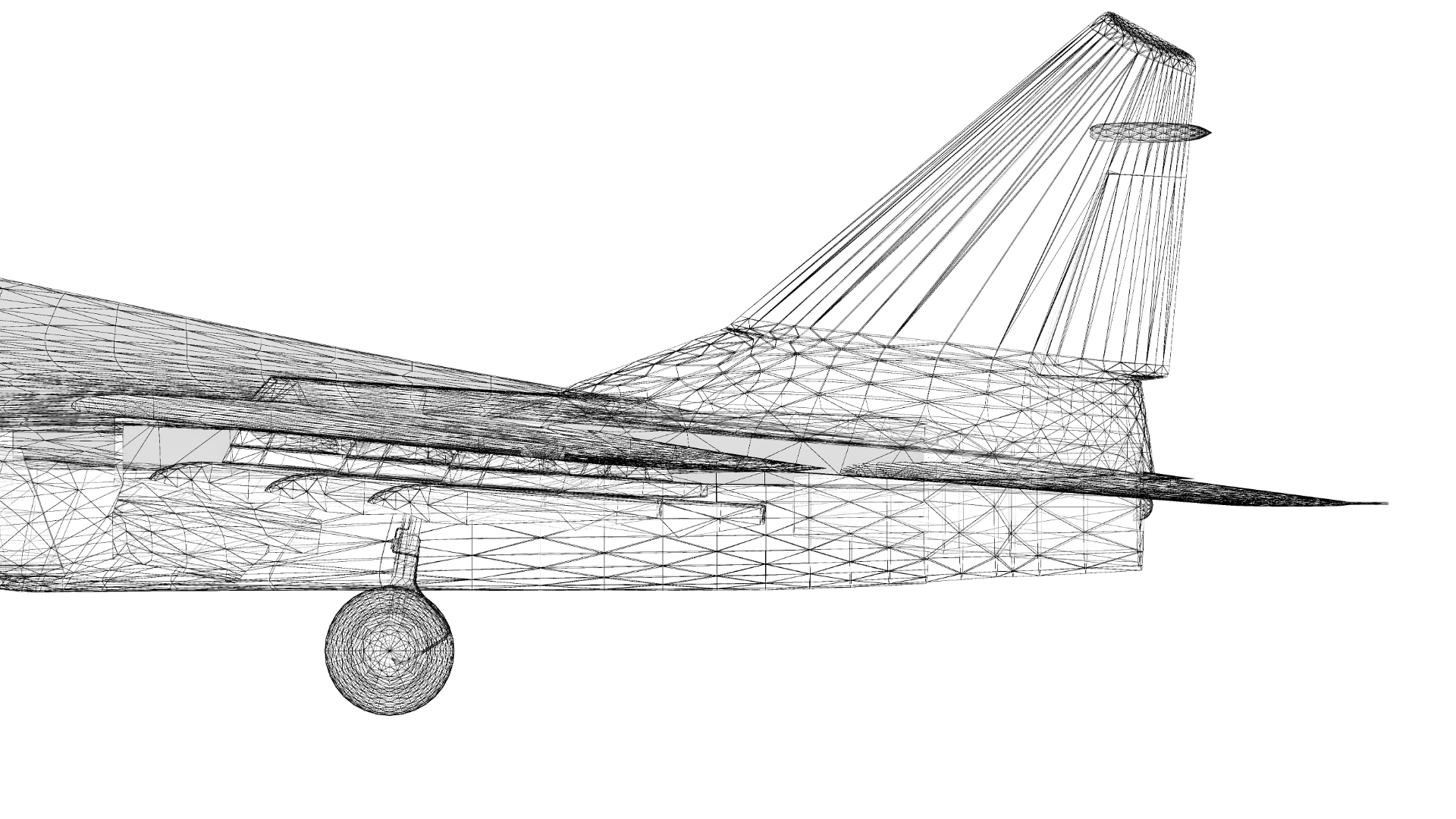
Amid shifting global security dynamics and rising defense budgets worldwide, the momentum of the Korean defense industry is poised to continue. Accordingly, the importance of high-strength aluminum, a cornerstone of modern defense manufacturing, is becoming increasingly vital.
Lightweight Trends in Next-Generation Defense Systems and Equipment
Future defense systems are increasingly engineered for autonomous operations, network-centric capabilities, and high mobility. As next-generation battlefield equipment and unmanned platforms, including drones, become heavily loaded with advanced electronics, the need for lightweight structures to maximize battery efficiency and extend operational range has become imperative. Light yet exceptionally robust, high-strength aluminum is uniquely positioned to serve as the optimal material solution to meet the rigorous specifications of these advanced military systems.
Expanding the Role of Aluminum in Launch Vehicles and Guided Weapons
The arrival of the commercially led New Space era, coupled with surging satellite launch demand, is delivering a powerful new growth driver for the high-strength aluminum market. As the deployment of 7000 series alloys expands rapidly across the skins and internal structures of space launch vehicles and precision-guided weapons, SeAH A&D's relentless alloy innovation will serve as a vital catalyst, elevating Korea's aerospace and defense competitiveness to new heights.
High-Strength Aluminum FAQ

What is high-strength aluminum?
High-strength aluminum is an advanced alloy engineered by adding elements such as copper, magnesium, and zinc to achieve superior strength and durability compared with standard aluminum. By delivering exceptional mechanical properties while maintaining a lightweight profile, it serves as an indispensable structural material across the aerospace, space, and defense industries.
Why is 7000 series aluminum widely used across the defense sector?
The 7000 series is recognized as achieving the highest strength among all aluminum alloys. As it offers robust structural strength comparable to mild steel while maintaining a lightweight profile, it is extensively specified in applications that demand both weight reduction and high structural integrity, such as aircraft fuselages, space launch vehicles, precision-guided weapons, and advanced military equipment.
What is the key difference between 6000 series and 7000 series aluminum?
The 6000 series offers excellent formability, corrosion resistance, and weldability, making it ideal for precision components and general structural frameworks. In contrast, the 7000 series delivers significantly higher strength, making it the material of choice for critical aerospace structures, launch vehicles, and primary load-bearing defense components. In short, while the 6000 series excels in versatility and ease of processing, the 7000 series is engineered specifically for high-strength, heavy-duty applications.
How do the aluminum extrusion and forging processes differ?
The extrusion process forms desired cross-sectional profiles by forcing heated aluminum through a specialized die, making it ideal for producing long components with complex geometries. In contrast, the forging process shapes material by applying immense pressure, which significantly enhances mechanical strength and structural durability. Within the aerospace and defense sectors, both methods deployed based on the specific operational demands of the final component.
Why are quality standards so rigorous for defense-grade aluminum?
Defense materials directly govern equipment performance and crew safety. Beyond achieving precise material strength and dimensional accuracy, manufacturers must maintain complete production traceability and systematic quality data. Moreover, global aerospace and defense primes enforce uncompromising certification protocols, demanding a far higher level of quality assurance for defense aluminum than for general industrial materials.
What defense aluminum products does SeAH Aerospace & Defense supply?
SeAH A&D manufactures high-strength 2000 and 7000 series aluminum alloys utilizing advanced casting, extrusion, and heat-treatment technologies. The company supplies high-strength materials applied to aircraft fuselages, wing structures, door frames, and suspension brackets. Through joint R&D with Korea Aerospace Industries (KAI), SeAH A&D developed Korea's first prototype AI7050 wing spar for commercial aircraft wings in 2022. Building on this momentum, the company successfully localized the AL7136 aluminum extrusion material for aerospace components in 2024, another historic first for the domestic industry.
List